Showing posts with label death penalty. Show all posts

Thursday, February 21, 2019

NH Death Penalty Optics

Michael George Haddad


The last time the State of New Hampshire executed anyone was in 1939. For the last 20 years, there has been a bill every biennium to repeal the death penalty. In 2000, a repeal bill passed both houses and was vetoed by Governor Jeanne Shaheen. 

In 2019, there is an impressive bipartisan coalition supporting HB 455, a bill that would change the death penalty in NH to life without parole. It seems likely that the bill will pass in both the House and Senate. Governor Sununu has said that he will veto it. There could well be, for the first time in 20 years, enough support for repeal to override the governor’s veto.

I’ve written about the death penalty several times over the years. We know it is expensive – more expensive than life in prison. We know it is not a deterrent. We know that people of color are more likely to be sent to death row. We know that a great many people have been wrongly convicted, spent years on death row, and then exonerated. We also know that at least one innocent person has been wrongly murdered by the state, in the name of “justice.” Above all, we know…well, not all of we, but most of we know that the death penalty is not about justice. It is about vengeance.

As the old saying goes, we kill people to show them that killing is wrong. The state should not be in the business of killing its citizens.

A big public hearing resulted in hours of testimony this week. There was testimony from murder victim’s family members. There was testimony from people who were wrongly convicted and sent to death row.  There was also testimony from former US Senator Kelly Ayotte, who breezed in to emphasize how important it is that we kill Michael Addison, the only person on death row in NH. Ayotte the NH Attorney General vigorously pursued the death penalty case against Addison, and used it as a springboard to a single term in the Senate. 

Michael Addison was charged with killing Manchester Police Officer Michael Briggs in 2006. In 2006, a millionaire named John Brooks was convicted of capital murder for his role in hiring people to kill his former handyman, whom he believed had stolen from him. In New Hampshire, contract killing is a capital offense.  John Brooks was given two life sentences without parole. In 1997, Gordon E. Perry killed police officer Jeremy Charron in Epsom, NH. After pleading guilty to capital murder, he was sentenced to life in prison without parole. 

When repeal advocates talk about how the death penalty isn’t equally applied, this is exactly what they mean. Gordon E. Perry is white. John Brooks is rich and white. Michael Addison is black. John Brooks was convicted the same year as Addison, in the same state. Kelly Ayotte did not zealously pursue his case. Gordon Perry and Michael Addison both killed police officers. Only one is on death row. 

Our Governor has said that he will veto a repeal because he “stands with law enforcement.” Our governor stands with law enforcement when it’s convenient. Sununu’s first legislative priority after being elected to his first term was to eliminate concealed carry licenses for firearms. Law enforcement vigorously opposed that bill. Sununu didn’t listen to them, never mind stand with them. Governor Sununu is a Trump acolyte, and we know that Trump loves the death penalty. Even after the five young black men known as the Central Park Five were exonerated after falsely being convicted of the rape, assault, and attempted murder of jogger Trisha Mieli, Donald Trump continued to call for their executions.

Civilized countries don’t engage in execution. The United States is increasingly uncivilized, particularly in the area of race and religion. We don’t hear any discussion of how, exactly, the state will kill Michael Addison. The methods sanctioned by our state are hanging and lethal injection. Lethal injection drugs are no longer available. The countries that manufacture them don’t sell them to us any more, because they don’t believe in the death penalty. Will New Hampshire purchase other, questionable drugs? Or will New Hampshire rebuild the gallows that was dismantled at the state prison in 1994?

We should, perhaps, take a moment to consider this.  New Hampshire hasn’t conducted an execution since 1939. Will we bring the death penalty out of mothballs to kill a black man? Would we hang him? Tiny, white, New Hampshire proudly clings to the first in the nation presidential primary, despite rumblings from other states that we’re tiny, white, and clueless about the rest of the country. If the moral arguments against the death penalty don’t sway folks, perhaps the very real potential of losing that exalted primary status will. 


Published as an op-ed in the February 22, 2019 issue of the Conway Daily Sun newspaper 


Thursday, March 15, 2018

Mired in the Dark Ages


Child marriage laws are in the news. The Florida legislature just voted to increase the marriage age from 16 to 17.  This is a compromise. Advocates fighting child marriage wanted to raise the age to 18, but that was too much for the legislature. After all, what if she’s pregnant?? Does forcing a pregnant child into marriage wave some kind of magic improvement wand over the situation?

Between the years of 2000 and 2015, there were 16,400 child marriages in Florida.  There were 207,000 child marriages in 41 states during those years. (There isn’t data for every state.) A whopping 87% of those marriages were girls, and most of them were married to adult men – men over the age of 18. Try to imagine the reaction if the story were that 87% of teenaged boys were being married off to adult women. I feel certain that the deafening silence around girls would turn to howls if it were boys.

In most states the age of consent is 16 or 17. Yet we don’t call it rape when a girl who is too young to legally consent to sexual relations is married off to her rapist. We look down on the “uncivilized” countries where child marriage is a regular occurrence, but we are one of those countries.  The highest numbers are in Florida, Texas, Kentucky, and Virginia.

As much as we might want to believe that this only happens in the southern states, we know better. Last year we learned that in New Hampshire, girls can be married at 13 and boys at 14. Last year, a bill to change that, was defeated in the NH House. Some of our male legislators bemoaned the thought that a young man going off to fight for his country wouldn’t be able to marry his pregnant teen girlfriend – as if he were a WWII Doughboy heading off to fight with “You’re a Grand Old Flag” playing in the background. Defending child marriage is defending child rape, and adult men having sex with teenaged girls is something our society has turned a blind eye to for a very long time.

A girl who is pregnant and married before she legally has any rights is a prime target for abuse. She is likely to enter a cycle of poverty that she will never recover from. Thinking that marrying this girl off washes away some kind of sin is ridiculous. The sin is adult men having sex with underage girls. The sin is men fighting against increasing the marriage age because they think it is their right to have sex with girl children.

This year another bill to raise the marriage age is before the legislature. It’s being touted as a “compromise.” It raises the age for both boys and girls to 16. If the bill passes, at least when an underage girl marries an adult man, she will have gone through puberty.

The death penalty is also back in the news in NH. A bill to change the penalty for capital murder to life imprisonment has come out of the Senate with a large, bipartisan group of sponsors. The minute the bill was announced, Governor Sununu announced he would veto it. This announcement came before there was a single hearing, before any of the sponsors offered testimony, and probably before he read it. The Governor made a big point of saying that he stands with victims and law enforcement. Last year, when Sununu took office, his first priority was getting a bill passed to eliminate the concealed carry license for a handgun. The NH Chiefs of Police were strongly opposed to that, as were victim’s rights groups. He ignored them both, preferring to pander to gundamentalists and the NRA.

There isn’t anything new to say about the death penalty. It’s barbaric, and perpetuating it only serves to put us in the same category as other countries that have terrible records on human rights. It’s not a deterrent. No one in New Hampshire ever thinks, “Ooops, I’d better go kill my wife/girlfriend/boss/neighbor in: Massachusetts, Rhode Island, Connecticut, Vermont, or Maine because they don’t have the death penalty there.”

At a Senate hearing this week, it was clear that the largest objection to eliminating the death penalty is the fear that the state won’t get to kill Michael Briggs, our only prisoner on death row. An officer testified that the existence of the death penalty sends the message that we (the people) have their (the cops) back. If I were a cop, I think I’d prefer the people had my back while I was alive – in the form of good working conditions, training, pay, and health coverage.

The bipartisan support behind the bill could increase to a number sufficient to override the governor’s veto. The state should not be in the killing business. It’s time for NH to move out of the dark ages.


This was published as an op-ed in the March 16, 2018 edition of the Conway Daily Sun newspaper


Thursday, December 14, 2017

Coming up in 2018


A friend from North Conway suggested I write a column “about some of the good, intelligent legislation proposed for 2018, and some of the decent, intelligent legislators who are striving to promote good and beneficial things for NH.” This sounded as if it would be easy. Not so. There are 1030 LSRs filed so far. An LSR is a legislative service request, which is how bills begin the journey to either becoming law or becoming dead.

We can expect a contentious legislative session. The majority party has seized the opportunity to file their entire wish list, knowing that they may never have control of the entire state government again.

Some of the good bills that are coming back were held over from 2017. SB 247 would prevent childhood lead poisoning from paint and water, and make an appropriation to a special fund for the purpose of remediating lead in rental housing. The bill passed the Senate and was amended by the House, and the Senate refused to concur with the amendments. Lead paint was outlawed 40 years ago. NH is the last state where a child died from lead poisoning. There are a lot of good organizations and some legislators who have been fighting to get the lead out for years.

SB 244 will be back. This bill prohibits licensed counselors from engaging in conversion therapy with persons under the age of 18. Conversion therapy is the discredited and damaging practice of trying to change a person’s sexual or gender orientation. The list of bipartisan sponsors includes Rep. Ed Butler.  

HB 1671 would abolish the death penalty. The fight to abolish the death penalty has been going on for decades. This year, three Democrats and a Libertarian will be the standard bearers.

HB 1213 would remove the exception for married minors from the definition of sexual assault. Last year a bill to stop allowing child marriage failed to pass. This would at least allow married minors to file rape charges against their adult spouses.

HB 1564 concerns the sexual assault of a victim who is incarcerated in a correctional institution by a person with supervisory or disciplinary authority over the victim. Last year the NH Supreme Court overturned a Belknap County deputy sheriff’s rape conviction. The deputy was transporting a prisoner, and had intercourse with her. He claimed it was consensual. The state argued that consent isn’t possible when one party holds authority over the other. There was a lot of jiggery pokery around what agency he was working for, who issued the transport order – and as a result he was freed. This bill is aimed at closing the many loopholes that allowed that to happen. The strong bipartisan sponsorship for this bill is a good sign that it may pass.

HB 1793 would establish a single payer health care system in NH. Given that the entire population of our state is smaller than many suburbs, this would make a lot of sense. I applaud the sponsors (including Rep. Knirk of Tamworth) for trying.

HB 1246 would increase the minimum wage for tipped employees. The minimum wage for tipped employees in NH is $3.26. Rep. Jackie Cilley has been fighting this fight for years. There is also legislation coming up that would allow employers to take tips from servers, but since nothing in that bill qualifies as good, we’ll take that up at another time.  

HB 1772 would allow online voting. Thirty states allow online voting, so it’s not a fad. This would forever put to rest the stories of busloads of people from Massachusetts. They can’t park that bus behind your laptop.

HB 1343 would protect beavers. It provides protection for beaver habitats and requires Fish and Game to include advice on beaver control on their website. We can all agree that protecting the wildlife in our state is a good thing – and in this session, I’m taking good where I find it.

HB 1611 would create a study committee to examine offshore wind energy development. Similar bills have failed in the past. Many of our legislators can’t even face a conversation about the future of energy in our state. State Rep. Renny Cushing perseveres – on this and so many other bills that would move our state forward.

HB 1632 would require bottled water to be tested for certain chemicals and labeled with the results of those tests. In a state where PFOA contamination has been so damaging, this makes sense. Rep. Mindi Messmer has proven to be a strong advocate for protecting water in our state.

Readers can find all of the proposed LSRs at the NH General Court website: gencourt.state.nh.us. The list of LSRs can be accessed on the right side of the page, under the heading “State Legislation Dash Board.”


These are some good bills. Next time we’ll look at the others.

PS: Alice, I tried.


Published as an op-ed  in the December 15 edition of the Conway Daily Sun newspaper 

Thursday, April 03, 2014

Crossover


March 27 is Crossover Day in the NH legislature. It’s the day when the House turns over their bills to the Senate, and the Senate returns the favor. This year there was so much delay and obstructionism that there was some doubt as to whether the deadline would actually be met. The House had 2 voting session days throughout the month of March, and the Speaker threatened to add a third session day on March 27.

It is difficult to know what the obstructionist’s goal is in holding everything up. They aren’t doing the People’s business. They aren’t enacting legislation, or doing what is best for the state. They are wasting taxpayer dollars and treating their colleagues with a glaring lack of respect.  They get all caught up in the drama of it; adult sized boys, buzzing around the chamber for whispered consultations and making “secret” signals from the sidelines. These aren’t votes they can win - the goal is just to slow the process down as much as possible. As I’ve said before, this is what you get when you elect people who hate government to BE the government.

There were 13 roll call votes on the March 12 session day. Two of them concerned a mandatory headlight use bill. That bill was debated for 2 hours, even though everyone in the chamber knew it wasn’t going anywhere. The whole process did, at least, amuse the New York Times reporter I was sitting next to. A bill regulating the use of alkaline hydrolysis as a means of disposing of human remains provided a stage for Rep. Jordan Ulery to leap upon and very dramatically describe the process of alkaline hydrolysis to the few legislators who stayed in the chamber.  The same bill had been proposed last year. This wasn’t new information, but when gumming up the works is the goal, no corpse must be left un-described. No one was going to be forced to dispose of a dead person this way unless they wanted to, but the loudest believers in freedom and liberty only seem to do so when its convenient for them. If a free gun came with alkaline hydrolysis, they’d be lining up around the block to throw Granny into the chamber.

There was also a lengthy debate that same day on repealing the death penalty. To the credit of all, that was mostly an intelligent and respectful debate. Most of our Carroll County delegation voted for repeal, and the bill passed the House. By the time you read this, the Senate Judiciary Committee will have had a public hearing on the bill. NH has spent $7 million so far on the death penalty case of Michael Addison, and we’re nowhere near done. The death chamber hasn’t been built. The drugs – Europe won’t sell us the drugs any more, because we’re barbarians. We don’t know what kind of drugs we’ll be using, or how much they’ll cost. Expect the entire shebang to tally up to near $20 million. Remember that, as you drive down East Conway Road. Assuming you return from that voyage be sure to ask Representatives Chandler, Buco, and McConkey where the money’s going to come from to execute that one guy.

Speaking of warm and fuzzy, a truly significant piece of legislation was recently passed and signed into law by the governor. Medicaid expansion will ensure that many low-wage workers in the North Country will have access to health insurance. A report recently issued by the Robert Woods Johnson Foundation and the University of Wisconsin Population Health Institute found that Coos County is the least healthy county in NH. Carroll County wasn’t far behind. In both Coos and Carroll, 17% of the population is uninsured. In both Coos and Carroll 18% of the population engages in excessive drinking. In Coos 18% of the population is in fair or poor health. The ratio of patients to mental health providers is 932:1. There is 7.7% unemployment in Coos, and 23% child poverty. In Carroll County there is 20% child poverty, and 17% of residents have severe housing problems. In Grafton County, 15% of the population is uninsured.

The bill originated in the NH Senate, where our own Senator Jeb Bradley was a supporter. The vote in the House fell largely – but not entirely – along party lines. There were a few Republicans who voted for people over ideology. Not many, but there were a few from the North Country. One of the conservative talking points suggested that “those people” would have no incentive to work if they got “free” health care. Most of us  know how hard people work up here just to stay afloat. Affordable health care isn’t going to pay their rent or put groceries on the table. It may well make the difference between preventative care and expensive “I waited because I couldn’t afford to go to the doctor” kind of care.

Given the dire situation in the North Country, it was depressing (though unsurprising) to learn that our newly minted Executive Councilor, Joe Kenney, voted against approving Medicaid Expansion. In other words, one of his first acts in office was to vote against the best interests of nearly 50% of the population in his district. Ray Burton would not have voted that way, but then, Ray was often described as the “champion of the north country,” a sobriquet that will never be applied to Joe Kenney.

Everyone should spend a session day at the State House to witness the full spectacle. The General Court website has streaming audio on session days, which I encourage folks to listen to, but it is not the same as being there to see all of the sideline drama. I’m pleased to report that no one from the Carroll County delegation is a major player in Obstructionist Theater, but all of you really should go see your representatives in action. It might well change the way you vote in November.


© sbruce 2014  
Published in the 4-4-14 issue of the Conway Daily Sun newspaper

Thursday, February 20, 2014

Our Citizen Legislature


Our state’s august legislative body finally wrapped up the voting on 2013 bills about 2 weeks ago. They should have been done much sooner, but the liberty crowd did their very best to obstruct and needlessly bog down the process. There were endless roll call votes on issues that didn’t merit such attention. They didn’t win anything; they just wasted taxpayer dollars and the time of their colleagues. Their war cry is “gummint is broken” and so they’re doing their level best to break it so they can say neener neener. The lesson? Do not elect people who hate government to be the government.

All the delay and obstruction means that the 2014 bills are behind, and the weather has conspired to put the legislature even more behind. After next week, legislators can count on two session days each week for most of March. It’s unfortunate that leadership (minority or majority) can’t seem to do anything about the obstructionist cabal.

The committee process is where one can still find representatives actually working together and listening to new information. At a recent executive session on HB 1170, the bill to repeal NH’s death penalty, 4 legislators came forward and said that because of all they had learned, they’d changed their minds about the death penalty. They’d come into the process as supporters. They cast their committee votes to recommend that the full House repeal the death penalty. This is what we always hope we will see: our citizen legislature working together for the good of our state.


We don’t always. At a hearing of SB 319, a bill to establish a 25-foot buffer zone around women’s health clinics, Senator Sam Cataldo was far more interested in airing a grievance about a union work site that he’s been nursing since 1966. He brought it up at least half a dozen times to women who testified in support of the bill. It was so disrespectful. One of the men who came to testify in opposition to the bill is affiliated with a terrorist group, the Army of God. Remember them? Eric Robert Rudolph, Clayton Waagner, and James Kopp are some of the more famous bombers and murderers. In no other aspect of our society would protestors and self-styled “sidewalk counselors” be allowed to harass people.

Just imagine the outcome if a group of earnest sober people started counseling patrons at our highway liquor stores. Or if a group committed to nonviolence began counseling about anger management in front of a gun shop. This harassment is allowed to continue because after all, this only affects women. We turn a blind eye to enabling terrorists because after all, it’s only women. If we were attempting to legislate MALE reproductive systems, all protests in front of all medical facilities would end forthwith. Fortunately, the Senate voted to pass the bill, so now it moves on to the House.

The Senate also voted to pass SB 318, a bill to establish the crime of domestic violence. It’s always been prosecuted under other statutes. At the hearing for this bill, Senator Boutin suggested strengthening the bill by adding stalking to the statute, a suggestion everyone applauded. It was added to the bill as an amendment.

As always, there are endless gun bills, and other bills aimed at eliminating revenue streams from our state government. Meanwhile, NH has the 11th worst infrastructure in the United States. We have over 300 bridges on the red list for structural impairment. We cannot finish work begun on highways because there is no money – and still we are told that NH has a spending problem, not a revenue problem. We do have a spending problem: we’re averse to raising enough money to spend on fixing our decaying infrastructure. We will firmly bury our heads and pretend that it’s some other guy’s problem for as long as we can. When a dam fails, or a bridge collapses – well then maybe we’ll start thinking about the future.
Meanwhile, companies will continue to relocate to states that have the kind of transportation and telecommunications infrastructure that will support their business needs.

A bill to increase the minimum wage will be coming up soon for a vote. Already Americans for Prosperity and other similar minded special interest groups are howling with outrage about how this will kill jobs. NH has the lowest minimum wage in New England. Massachusetts and Vermont have the highest. Both states are faring far better than NH in adding new jobs. Most people who are paid minimum wage are adults. Most are women, trying to support children. No one works harder than low wage workers.

At the same time, NH has some of the highest housing costs in the nation, and there is great resistance to building multi-unit housing, because THOSE PEOPLE will move to town. We heard it for years in Conway. Welfare recipients from Massachusetts were just waiting to move to affordable housing. All the public transportation and safety net programs we offer here were a veritable beacon to the impoverished.

A new study from the Economic Policy Institute finds that 83% of the income growth in NH between 2009-2011 went to the top 1%. Meanwhile, the jobs that have been created since the recession are mostly low paying service jobs. This is not unique to NH. This is what’s happening all over the country. 

At some point we (the societal we) will have to make some decisions about work, pay, poverty, and the future. If not, we’re likely to hear the sounds of tumbrels rumbling in the distance.


Sow the same seed of rapacious license and oppression over again, and it will surely yield the same fruit according to its kind. ~ Charles Dickens, A Tale of Two Cities


© sbruce 2014
Published in the Conway Daily Sun Newspaper. 

Thursday, October 31, 2013

Time to Kill the Death Penalty


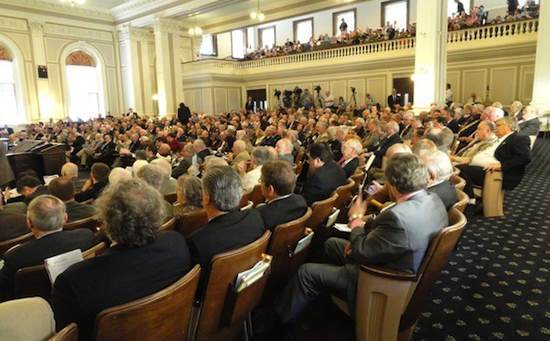
Last week the NH Coalition to Abolish the Death Penalty had a press conference to announce the kick-off of their new campaign to repeal the death penalty in New Hampshire. There was a large bi-partisan group of legislators and community leaders on hand to show their support for the measure. Repeal bills have been tried before. In 2000, both the Republican controlled House and Senate voted to repeal the death penalty, but Governor Jeanne Shaheen vetoed the bill. This year, it seems that the planets may be in the proper alignment. The repeal bill has the support of the faith community, some Democrats, some Republicans, and much of the libertarian crowd. It’s a strong group of supporters.


There are 32 states that still have the death penalty. Eighteen states have abolished it. Alaska abolished the death penalty in 1957, before they officially became a state in 1959. New Hampshire is the only remaining New England state that has not abolished capital punishment.

NH has a long and convoluted relationship with the death penalty. We’ve mostly been squeamish about it, about using it, which is a good thing.  In 1834, Governor William Badger was the first to ask for a repeal. In 1972, a US Supreme Court decision voided the NH death penalty. In 1974 the legislature passed a new statute. In 1976 the US Supreme Court reaffirmed the use of the death penalty. In 1977 the NH statute was changed to make execution an option not a mandate. In 1984, Governor Meldrim Thomson called a special legislative session to enact new legislation. In 1986, the law was changed to make lethal injection the primary method of execution, leaving hanging as an option.  Every two or four years some kind of tinkering with the statute takes place.

New Hampshire may be stubbornly clinging to the option, but we’ve never been vigorous practitioners. The first recorded execution was in 1739 and the last was in 1939. NH hanged 22 people in all, and one, Ruth Blay, is now regarded as having been executed wrongly. She was hanged in Portsmouth in 1768 for allegedly killing and concealing the body of her illegitimate infant. She hid the baby under the floorboards of a barn. At the time, concealment of the birth of an illegitimate child was a capital offense.

That’s the thing. Long before DNA, we were executing the wrong people some of the time. Since 1973 some 140 innocent people on death row have been exonerated. There have been many problems with capital cases over the years, including mistaken eyewitnesses, incompetent lawyers, unreliable informants, and coerced confessions. The very possibility of executing an innocent person should be enough to deter us. Unfortunately the moral high ground isn’t usually persuasive. Money usually is.

In 2009, the legislature established a Death Penalty Study Commission. A year later the majority voted to retain but not expand the death penalty. The committee agreed that the death penalty is more expensive than the alternatives. That has proven to be true. A death penalty sentence costs 3-5 times as much as life without parole. The state of NH has already spent about $5 million on the Addison case. That amount is expected to at least double by the time appeals are exhausted. At the press conference, retired Superior Court Chief Justice Walter Murphy wondered what sort of reaction legislators would get if they explained to constituents that there was a NH program that cost $1-2 million per year and the only people who get anything out of it are lawyers. The last budget passed delivered a $10 million cut to the judicial branch. That’s as much money for the whole state as the prosecution of just one case is expected to cost. So much for Yankee thrift.

                                            Justice Walter Murphy

There is no proof that the death penalty is a deterrent to crime. Few criminals consider the consequences before committing any crime, preferring to think that they’re too smart to get caught. Or in the heat of the moment the consequences don’t even occur to them.

The death penalty is presented to us as justice. An eye for an eye, a way of families getting closure. A case that drags on for years and years doesn’t allow for closure or healing. Some of the most eloquent speakers against capital punishment are family members of murder victims. Lead sponsor of the current repeal bill, Rep. Renny Cushing, is one of those eloquent speakers. (see below)  His father was murdered in 1988. A sentence of life without parole doesn’t disrespect the memory of murder victims. It protects the public while preventing any possibility of a mistake. It is a sentence that prevents the state from using violence in an attempt to prevent violent crime, which is as unsuccessful as killing for peace has proven to be.  Or, as Justice Murphy put it, “The Constitution of NH says nothing about retribution. It’s the Department of Corrections, not retribution.”

The bulk of executions in the United States take place in the south. Texas leads the way, having executed over 500 people since 1976. During that same time period there was precisely one execution in New England. It was in Connecticut. Yet despite this execution zeal, any one of the New England states have far less violent crime than any of the top execution states.

NH is consistently ranked as one of the safest states to live in. Given that we haven’t executed anyone since 1939, it’s safe to say that the death penalty isn’t what makes us safer. The group that has come together in opposition to capital punishment is impressively diverse. It’s time for NH to join the rest of our civilized New England brethren, and repeal the death penalty.


“Before my father’s murder I had evolved a set of values that included a respect for life and an opposition to the death penalty. For me to change my beliefs because my father was murdered would only give more power to his killers, for they would then take not only his life but also his main legacy to me: the values he instilled. The same is true for society. If we let murderers turn us to murder, we give them too much power. They succeed in bringing us to their way of thinking and acting, and we become what we say we abhor.”  ~  Renny Cushing


Resources: 


© sbruce 2013    Photos from October 24 press conference by sbruce

Also published as a bi-weekly oped column in the Conway Daily Sun newspaper. 

Thursday, September 19, 2013

It's All Over But The Shooting


September is here, and that means it’s time for legislative fun to begin again. September 9 was the first day that representatives could file LSRs (potential bills/Legislative Service Requests) for 2014. September 27 is the last day to file House LSRs. September 30 is the first day for Senate LSRs, and the cut off date for the Senate is October 25.

So far, House members have filed 86 LSRs. They have not yet been assigned numbers; there is no actual bill text available, just the titles chosen by the sponsors of the LSRs. Those titles sometimes provide great clarity into the potential bill, and sometimes create more questions. It’s worth noting that 2014 is an election year. Some legislators are intent appealing to voters through social engineering. Some are intent on making a name for themselves through means that the rest of us might find unusual.

The very first LSR listed is quite clear: “repealing the death penalty in NH,” is sponsored by Rep. Robert Cushing. At a time when other states are repealing their death penalty statutes out of fiscal concern, NH chose to bring ours out of mothballs and use it, thanks to former AG Kelly Ayotte, who rode a death penalty case right to the US Senate. That case has already cost our state millions, and will cost us many more before it is finished. It’s sad that the moral argument has less power in this state than the financial – but the bottom line is pretty simple. Are you willing to see an increase in your property taxes to pay for executions?

Representative Kathleen Souza has filed 2 bills that seem related to making a legal procedure more difficult for women to avail themselves of in the state of NH. The first has to do with the licensure of out patient abortion clinics, and the second has to do with gathering data. Naturally women have no right to medical privacy. Imagine a bill filed to gather data from the records of men getting prescriptions for erectile dysfunction drugs? Would men meekly submit to having their private medical records invaded by nosy number seekers?

Rep. Leon Rideout has filed an LSR to include the term “fetus” in the definition of “another” for the purpose of certain criminal offenses. This is a tactic frequently engaged in by the uterus police in an attempt to create “fetal personhood” which would grant a clump of cells the same legal rights as an adult woman is supposed to have. In an election year we can expect to see more bills aimed at regulating women from the crowd that is bitterly opposed to regulating guns.

Rep. George Lambert has filed 6 bills so far. Rep. Lambert is considering a run for governor next year. Lambert would like to repeal the timber tax, eliminate sugar packet requirements, and repeal the licensing of career schools. He also has bills relative to the conferring of college degrees, relative to training programs in career schools, and relative to funding career schools. These are interesting areas of focus for a guy who is considering a run for governor in a state where he has no name recognition. It sounds as if the freedom and liberty crowd is gearing up for another attack on hair stylists and beauticians. Or to put it more bluntly, an attack on women’s work.

NH currently has 500 bridges on the red list for structural impairment. Rep. John Cloutier, who proposes that the priority status of the widening of I-93 be repealed in the 10-year transportation plan update, filed the only LSR filed that has any grounding in infrastructure. Perhaps there will be some interest in solving our infrastructure problems when one of those bridges finally collapses and people are injured or killed.

Rep. JR Hoell has filed an LSR requesting Congress investigate the Benghazi incident. As we all know, Congress has, in fact, investigated. Rep. Hoell just doesn’t like the results of that investigation, so he’s willing to waste $1500 of our tax dollars to get his name up in lights with a bill to nowhere.

The NHGOP doesn’t seem to have heard, never mind heeded Louisiana Governor Bobby Jindal’s warnings about the need to stop being “the party of stupid.” Former NH State Senator Jim Rubens announced his intention to run against popular US Senator Jeanne Shaheen. At his press conference, he described Senator Shaheen as “out of touch” with New Hampshire voters.
Shortly after the announcement, we learned of a blog post Rubens made in 2009, linking women in the workplace to the incidence of mass shootings. It seems that women have taken men’s jobs away from them, and that’s caused them to start gunning people down. In this same blog post, Rubens also said that “tweaking the tax code to add manufacturing jobs would be one way to relieve the stress on men.” It seems Rubens slept right through NAFTA and all other free trade agreements, and is unaware that the US gave the manufacturing industry away.  

Rubens has since removed that post from his blog, and put his blog behind a firewall so that we can no longer see his odes to being part of the glorious one percent: “I just returned from a not atypical vacation of private charter flights, organic meals on white linen, and a private bungalow.” It seems likely he wasn’t the inspiration for Aaron Copeland’s “Fanfare for the Common Man.”

This is some kind of a record – beginning and ending a campaign on the same day. It’s all over but the shouting (or the shooting). Rubens just doesn’t realize it yet. Those who defend him will only serve to alienate female voters even further, especially given that the gender wage gap is higher in NH than many other states. Women in NH earn $0.77 for each dollar earned by men.  Ten percent of NH women live in poverty. Of minimum wage earners in our state, 69% are women. No wonder there haven’t been any mass shootings here, eh Jim?

There are a great many problems in our state and our nation that need serious attention. It’s a shame they won’t be getting any this year.


“If stupidity got us into this mess, than why can’t it get us out?” ~ Will Rogers


© sbruce 2013 
published as a biweekly column in the Conway Daily Sun newspaper